Why a Major Consumer Shift is Already Happening
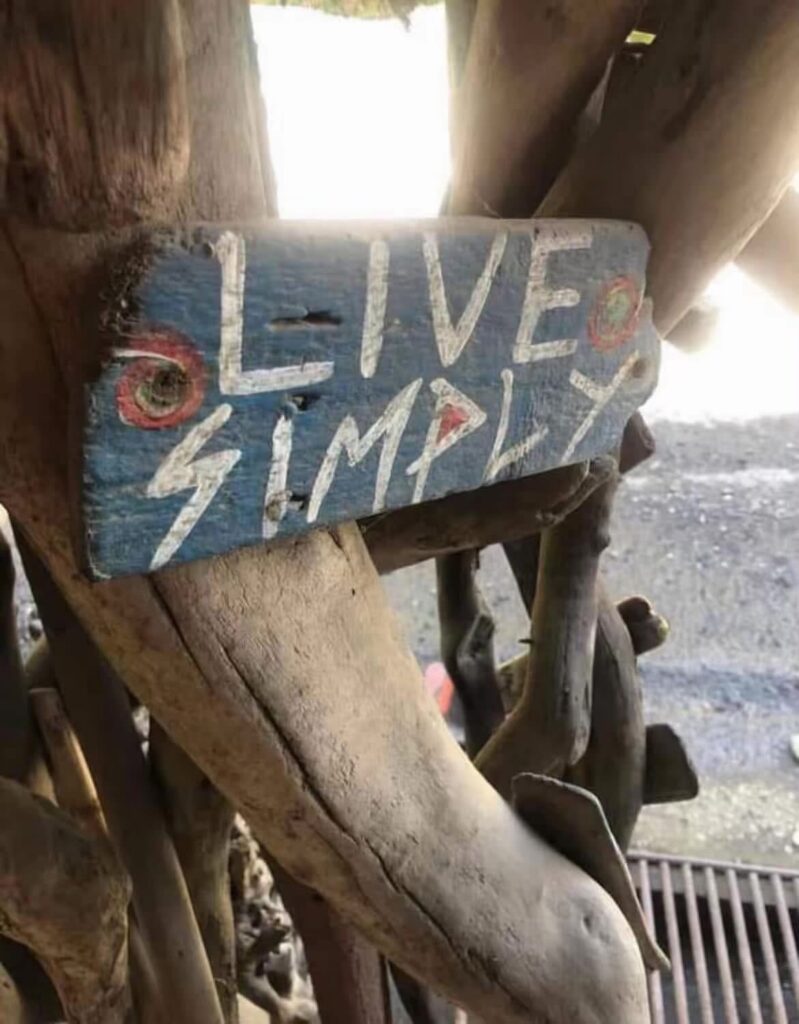
“Live Simply.”
That phrase is beginning to carry far more weight than most people realize.
What was once seen as a lifestyle preference is quickly becoming a cultural shift.
Over the next decade, we are going to witness a major transformation in consumer behavior…one driven by people quietly rejecting hyper-consumerism.
But what exactly is hyper-consumerism?
Hyper-consumerism is a culture that teaches people to constantly buy, upgrade, consume, perform, and chase more in order to feel successful, valuable, accepted, or fulfilled.
More products.
More trends.
More status.
More visibility.
More accumulation.
It is the belief that happiness, identity, and self-worth can somehow be purchased externally.
For decades, society normalized this mindset. Entire industries were built around convincing people that “more” would finally make them feel enough.
But something is changing.
People are beginning to realize that endless consumption does not automatically create peace, purpose, or fulfillment.
And that realization is reshaping how consumers think, buy, and live.
Why People Are Rejecting Hyper-Consumerism
This shift is not happening because people no longer appreciate innovation, beauty, ambition, or success.
It is happening because people are awakening to something deeper:
The realization that a meaningful life cannot be built through endless consumption.
For years, society conditioned people to search for fulfillment externally:
through products,
through status,
through appearances,
through constant upgrading.
But many are beginning to recognize that true fulfillment was never hiding in accumulation.
The phrase “Live Simply” reflects something much larger than minimalism.
It reflects a growing desire to return to what actually matters.
Not less life.
More intentional life.
Not as limitation.
As liberation.
A liberation from the pressure to constantly prove worth through what we own, display, or consume.
People are becoming more intentional with their energy, attention, money, and time.
They are choosing depth over distraction.
Presence over performance.
Meaning over excess.
And that mindset will reshape consumer behavior, leadership, and business for years to come.
The Future of Consumer Behavior: Meaning Over Excess
The years ahead will bring a major shift in what consumers prioritize.
People are becoming far more intentional about:
- what they buy
- who they support
- where they spend their money
- how they spend their attention
- and which companies deserve their loyalty
Consumers are starting to ask deeper questions:
- Does this improve my life?
- Does this align with my values?
- Is this meaningful?
- Is this brand trustworthy?
- Is this solving a real problem or simply another distraction disguised as fulfillment?
These questions will shape the next decade of business.
Why Businesses Must Pay Attention
For years, many companies competed on volume, speed, visibility, scale, aggressive marketing, constant stimulation, and psychological urgency.
But the era of endless noise and disposable experiences is losing its grip.
Consumers are evolving emotionally and psychologically.
They are becoming more discerning.
People are beginning to realize something more profound. Self-worth cannot be purchased. And once consumers internalize that truth, entire industries begin to shift.
The products and services that succeed over the next decade will need to:
- solve real problems
- improve people’s lives
- support human well-being
- build trust through transparency
- create meaningful experiences
- and deliver genuine long-term value
Because people no longer want to feel manipulated into consuming.
They want to feel aligned with what they choose to support.
The Rise of Intentional Living
What is replacing hyper-consumerism is intentional living.
People are increasingly choosing:
- quality over quantity
- presence over distraction
- value over volume
- clarity over clutter
- conscious choice over impulse
- authenticity over perfection
- experiences over endless accumulation
- meaningful connection over social validation
This does not mean people will stop buying products or investing in innovation. It means they will become more selective.
The future belongs to brands that improve lives, not increase consumption. They will not sell an identity. They will help people reconnect with it.
It is about rejecting the idea that self-worth can be purchased. And that distinction will define the next generation of successful brands and businesses.
Final Thoughts
The future does not belong to the loudest brands. It belongs to the most meaningful ones.
The rejection of hyper-consumerism is not a passing trend. It is a cultural realignment in how people relate to value, identity, and consumption.
Consumers are evolving. People are tired of being told they need more to become more. People don’t just want polished messaging anymore. They want alignment.
And the companies that evolve emotionally, ethically, and strategically alongside them will shape the future economy.
The companies that will define the next decade will be the ones that understand a simple but powerful truth:
Self-worth was never something you could purchase.
And that is where everything comes full circle.
Because “Live Simply” is not a slogan about having less. It’s not a lifestyle trend. It is a shift in awareness.
It is a return to truth in a world designed to fragment attention.
A return to authenticity in a world optimized for performance.
A return to meaning in a world driven by noise.
So here is what matters now.
If you are building something…whether a brand, a product, a service, or a message, storytelling alone is no longer enough.
The greatest storytelling today must be anchored in authenticity.
Not as a tactic, but as a foundation.
Because people are no longer buying narratives that feel constructed.
They are responding to what feels real.
So before building your next offer, ask yourself:
Does this genuinely improve people’s lives… or does it simply feed distraction?
And more importantly:
If attention disappeared tomorrow, would this still hold meaning?
Those questions will define the businesses that last.